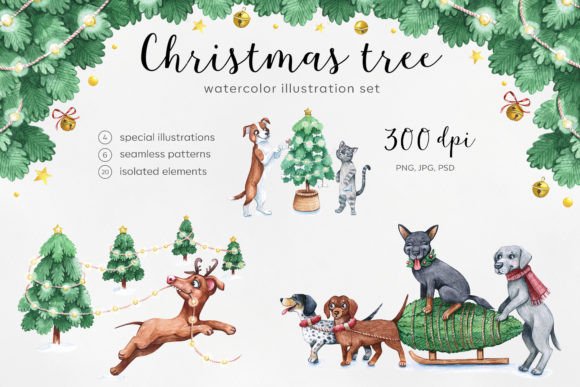
Christmas Fir Tree Snow Watercolor
When I first opened the Christmas Fir Tree Snow Watercolor file, my immediate reaction wasn't about stitch counts or file formats. It was about the mood. There is a distinct difference between a rigid, geometric vector and something that breathes like watercolor. This design feels soft, inviting, and undeniably festive without screaming for attention. As someone who has reviewed countless designs for client projects and personal craft businesses, I often find myself looking for that specific balance: enough detail to look professional, but enough simplicity to stitch reliably. The Illustrations category here is a bit of a misnomer because this isn't just a flat image; it is a blueprint for texture and depth that translates beautifully into thread.
I recently decided to put this design through its paces on a custom project for a local holiday boutique. The goal was to create a limited run of embroidered tote bags and aprons for a seasonal pop-up shop. I needed something that would look handcrafted and artisanal rather than mass-produced. The Christmas Fir Tree Snow Watercolor design offered exactly the organic feel required for a brand identity focused on warmth and tradition. When I laid out the mockups, the watercolor aesthetic promised to soften the harsh lines often found in traditional holiday motifs, making it perfect for a modern, chic gift shop.
From Digital File to Finished Product
The transition from a digital preview to a stitched reality is where many designers struggle. With Christmas Fir Tree Snow Watercolor, the challenge lies in capturing those delicate washes of color and the subtle bleeding edges that define the watercolor style. In a real-world scenario, such as embroidering a baby onesie or a nursery pillow cover, the softness of the design prevents it from feeling too heavy or stiff against the skin. However, achieving that effect requires careful selection of thread colors and stitch types.
If you are planning to use this for custom apparel like sweatshirts or t-shirts, the design's layout is generous enough to allow for a variety of thread palettes. A classic red and green combination might feel a bit cliché, but using shades of sage, cream, and dusty rose could elevate the piece to a high-end boutique level. The design works exceptionally well with a mix of satin stitches for the fir branches and fill stitches for the snow accumulation. The running stitch can be used sparingly to mimic the falling snowflakes, adding a layer of movement that static images cannot convey.
For small business owners and Etsy sellers, the visual appeal of this design is a significant asset. Customers browsing online rely heavily on product photos and mockups before purchasing. A clean, well-executed embroidery of Christmas Fir Tree Snow Watercolor on a tea towel or kitchen towel creates an immediate sense of quality. It suggests that the maker took time to select the right materials and execute the stitching with precision. This perception directly impacts customer trust and allows you to command a higher price point for your handmade products.
Where to Exercise Caution
While this design is versatile, it is not a one-size-fits-all solution. There are specific scenarios where Christmas Fir Tree Snow Watercolor might require extra preparation or a different approach. One critical area to consider is the hoop size. If you are working with a smaller machine or have limited space on a garment, the intricate details of the watercolor wash might get lost if the design is scaled down too aggressively. Small hoop sizes often compress the fabric, which can distort the delicate edges of the tree branches.
Fabric texture plays a massive role in how this design reads. On a smooth cotton canvas, the watercolor effect will shine. However, on a textured fabric like a chunky knit sweater or a rough burlap sack, the fine details may disappear into the weave. Similarly, stretchy fabrics like jersey or spandex blends present a challenge. Without proper stabilizer usage, the tension of the embroidery can cause the fabric to pucker, ruining the fluid look of the watercolor style. For these applications, a cutaway stabilizer is often non-negotiable to maintain the integrity of the design over time.
Dark fabrics also demand a strategic approach. While white thread on dark fabric is standard, the subtle variations in the watercolor effect might get swallowed up by the background color. You might need to add a underlay or a specific backing color to ensure the lighter tones of the snow and highlights remain visible. Additionally, if you are creating an embroidered patch that needs to be durable for frequent washing, you must ensure the stitch density is sufficient to prevent the threads from fraying or pulling apart after multiple cycles.
Practical Notes for the Embroidery Designer
Before committing this design to a final production run, I always recommend a rigorous testing phase. Start by stitching Christmas Fir Tree Snow Watercolor on scrap fabric that matches your intended final material. This step is crucial for verifying thread color contrast. What looks vibrant on your screen might appear muddy once stitched, especially if the thread sheen interacts poorly with the fabric texture. Check the stitch density carefully; too much density can make the design stiff and prone to breaking, while too little can leave gaps that ruin the watercolor illusion.
Inspecting small details is another vital step. Zoom in on the corners of the design to see if any tiny elements might be lost during the digitizing process or the stitching itself. Sometimes, what appears as a solid line in the software breaks into separate segments when converted to machine code. Testing the design in black and white mockups can also help you visualize the value range of the design, ensuring that the light and dark areas provide enough contrast to be legible on various backgrounds.
For those selling finished items, confirming the licensing terms is essential. Many digital files come with restrictions on commercial use, meaning you cannot sell the physical products made from them without purchasing a specific license. Always review the terms before listing commercial embroidery items on platforms like Etsy or at craft fairs. Furthermore, consider the end-user experience. Will the finished product hold up to the rigors of daily life? A holiday embroidery piece on a guest pillow should withstand occasional cleaning, while a baby embroidery item needs to be gentle and secure.
In conclusion, Christmas Fir Tree Snow Watercolor is a strong candidate for anyone looking to add a touch of artistic flair to their embroidery project. Whether you are designing a personalized gift for a family member or building a line of small shop products for your brand, this design offers a unique aesthetic that stands out from generic clip art. By paying attention to fabric choice, stabilizer application, and thread selection, you can transform this digital file into a stunning finished product that delights customers and elevates your craft business. Remember, the best results come from thoughtful preparation and a willingness to test before you commit to the final piece.